
Industrial electrical services Brisbane. Asset programmes that reduce downtime.
Asset maintenance and lifecycle replacement, switchboard upgrades and warehouse LED lighting across Brisbane industrial sites.
AMP’D Services Group provides industrial electrical services across Brisbane under Electrical Contractor Licence 1504460, including Tingalpa, Murarrie, Hemmant, Cannon Hill and the eastern industrial corridor. We deliver electrical asset maintenance programmes, switchboard upgrades and warehouse lighting upgrades for plant, warehouse and facility operators, with condition records and test data supplied as standard.
Before you call
What plant and site managers tell us
“Downtime arrives without warning.”
A board trips, a line stops, and the cost of the hour is far larger than the cost of the part. Nothing in the maintenance history flagged it because there was no maintenance history.
“Assets are replaced only when they fail.”
Run-to-failure is a strategy by default rather than by decision. It moves every replacement to the worst possible moment: mid-shift, unbudgeted, and with whatever gear is available that day.
“Capital spend turns up as a surprise.”
A switchboard replacement lands in the middle of a financial year with no line item behind it. The engineering was never the hard part. Explaining the number with no notice
“Nobody has assessed the asset base in a decade.”
Boards installed by contractors who have moved on, schedules that no longer match the circuits, and additions nobody drew up. The site works, but no one can say for how much longer.
Every one of those is the same problem wearing a different hat: no one has written down what the site owns, what condition it is in and when it needs replacing.
ASSET MAINTENANCE
Electrical asset maintenance and lifecycle replacement in Brisbane
A written record of every electrical asset on site, ranked by what its failure would cost you, inspected on an interval that matches that ranking, and replaced on a schedule you set rather than on the day it stops.
The programme starts with an assessment. We walk the site, open the boards, photograph what is there and build an asset register: location, make, age where it can be established, condition rating, protection arrangement, spare capacity and any defects visible on the day. For most sites this is the first time the electrical asset base has existed as a single document.
Each asset then carries a criticality ranking based on the consequence of its failure, from production stopped through to negligible. Ranking sets the inspection interval, so a board feeding the main line is looked at quarterly with annual thermographic scanning while a lighting distribution board in a store area may sit on an annual cycle. Scheduled inspection and testing runs to those intervals and every result goes back onto the register, which means degradation shows as a trend rather than as an incident.
The output that matters to the people approving spend is the five-year capital forecast. Each asset carries a projected replacement year and an indicative cost, totalled by year, so plant replacement enters the budget cycle with notice. Defects raised along the way sit on a tracked list with a risk rating and are closed out with evidence, so nothing quietly stays open for three years.
Compliance testing runs alongside the asset programme rather than separately from it. Test and tag, exit and emergency lighting and RCD testing across an industrial site sit on the same register, on the same intervals and inside the same report as the switchboards and the distribution gear, so the site has one record.
What is included
The initial assessment is priced per site by asset count and access. Ongoing programmes run on a fixed annual fee covering inspection, testing and reporting, with replacement works quoted separately so routine work never carries unapproved capital.
SWITCHBOARD UPGRADES
Commercial and industrial switchboard upgrades in Brisbane
Switchboard replacement on an operating site is a logistics problem before it is an electrical one. The board is straightforward. Getting the load off it, keeping the critical circuits alive and getting it back on inside an agreed window is the work.
We start with a capacity assessment against measured load rather than nameplate assumptions, using logged data where the load profile matters. That tells you whether the board is genuinely at its limit, whether spare ways exist for planned plant, and whether protection grading still holds after years of additions. Where a board can be safely maintained rather than replaced, we say so and record why.
We then state a clear position on the existing board: its condition, whether its construction, protection and fault levels remain appropriate, what non-compliances exist and what the practical consequence of each is. That position is written, because it is the document that supports a capital request months later.
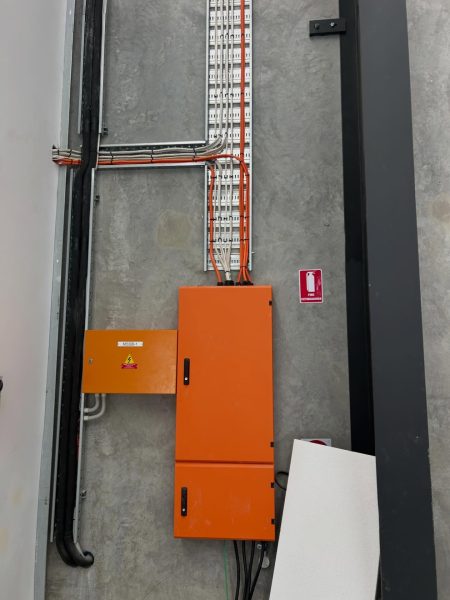
Delivery is staged. Changeovers are broken into sections so only part of the site is affected at a time, with temporary supply arranged where a load cannot stop, and each outage window costed and scheduled before approval. Metering and submetering by area or line is installed during the changeover while the board is open, labelling and schedules are produced to match the as-installed circuits, and post-installation testing covers earthing, insulation resistance, protection operation and phase balance, issued as a certificate pack.
What is included
Priced as a scoped lump sum from the assessment, with the switchgear schedule, outage windows, temporary supply and exclusions listed before award. Long-lead switchgear is ordered against the changeover date, not the start date.
Looking for a residential switchboard upgrade? See residential switchboard upgrades.
LIGHTING UPGRADES
Warehouse and industrial LED lighting upgrades in Brisbane
A lighting upgrade is one of the few electrical projects that pays for itself on a schedule you can calculate in advance. The two things that decide whether it does are the lux levels you actually need and the hours the lights actually run.
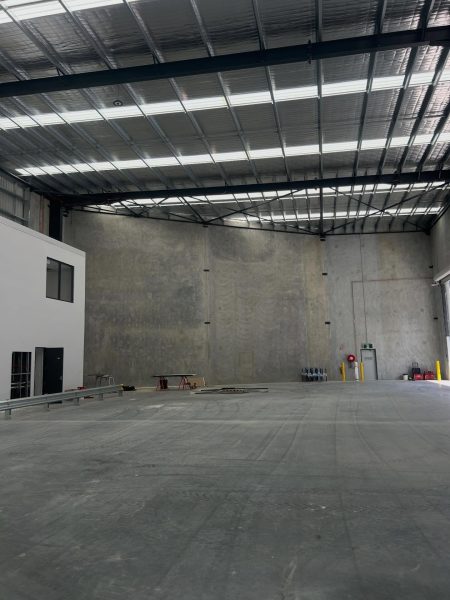
The audit comes first. We measure existing lux levels at floor and task height across the racking, aisles, pick faces and any assembly or inspection areas, then compare those readings against the levels AS/NZS 1680 sets for the tasks performed in each. That usually shows two things at once: areas lit far above what they need, and specific task areas lit well below it.
The replacement design works to those levels rather than to a like-for-like fitting swap, which is where most of the saving comes from. Controls and sensors extend it: occupancy detection in aisles that are used intermittently, daylight harvesting near translucent roof sheeting, and zoning so a night shift working one end of the building does not light all of it.
Installation is staged around operations, zone by zone, using existing access windows where possible. Existing fittings are removed and disposed of correctly, including any fittings containing mercury from older discharge lamps. After installation we verify the result with measured readings against the design, so the lux levels are demonstrated rather than assumed.
What is included
The audit is priced per site and credited against the upgrade if you proceed. The upgrade is quoted as a fixed price with the fitting schedule, staging plan and the energy assumptions behind the payback stated in writing.
Book a free site inspection and find out what the asset base is really costing.
We walk the switchrooms, boards and lighting, photograph the condition and give you a written summary with indicative replacement priorities, whether you engage us or not.
Or call 0413 070 411
7am to 5pm, Monday to Friday
Why AMP’D
The contractor who prices the project also runs it
Twenty-three years in the electrical industry, fifteen of them estimating and managing commercial and industrial projects.
01
Priced by the person who manages the work
Fifteen years estimating and managing commercial and industrial projects sits behind every programme. The forecast is built by someone who has run the changeovers, not by someone reading a price book.
02
Condition recorded, not remembered
Every asset carries a condition rating, a test result and a date. Replacement decisions come off the register, so the argument is about timing rather than about whether the problem is real.
03
Planned work in planned windows
We work with your team to deliver our services in a prior arranged time lot to mitigate any downtime of your site.
04
Recurring faults become projects
Where the same fault keeps coming back, we would rather define it, scope it and fix the cause once than keep attending it. That is the difference between a maintenance contractor and a maintenance programme.
How it works
Five steps from first call to a funded replacement plan
01
You make contact
Tell us the site, the asset types and what has already failed. You get a reply within 2 business days.
02
We inspect the asset base
A free walk-through of switchrooms, boards, distribution and lighting, photographed and rated as we go.
03
You receive a register and a forecast
An asset register with criticality ranking, a defect list and a five year replacement forecast with indicative costs.
04
We deliver the programme
Scheduled inspections, staged changeovers and upgrades planned around production windows and shutdowns.
05
You keep the record
Updated condition data, test results and close-out evidence after every visit, ready for the next capital round.
Client references
What industrial clients say




Industrial FAQ
Questions we get asked before a programme starts.
General
Do you offer 24/7 emergency callouts?
No. We work standard business hours on planned and booked work. Shutdown windows are arranged in advance. A maintained asset base is what reduces the number of after-hours events you have at all.
Can you work around production and shutdowns?
Yes. Works are sequenced against your production calendar, with the outage duration for each stage stated before the programme is approved rather than discovered on the day.
Are you licensed and insured?
Yes. Electrical Contractor Licence 1504460, with public liability and professional indemnity cover. Certificates of currency are supplied on request.
Can you work alongside our in-house maintenance team?
Yes. Many sites keep day-to-day reactive work in-house and use us for testing, condition assessment and the capital replacement programme. The register is shared, not withheld.
Asset maintenance
What does an asset condition assessment cover?
Switchboards, distribution, protection devices, cabling condition, earthing, labelling and schedule accuracy, plus lighting and any critical plant supplies. Each asset is photographed, rated and entered on the register with its location.
How often should inspections happen?
Critical assets are typically inspected quarterly with annual thermographic scanning, and lower criticality assets six-monthly to annually. Intervals are set per asset and written into the programme.
How is criticality ranked?
By the consequence of that asset failing: production stopped, life safety affected, a single area affected, or negligible. Ranking drives inspection frequency and replacement order, so spend follows risk.
What is in the five year capital forecast?
Each asset with a projected replacement year and an indicative cost in today’s dollars, totalled by year, so the plant budget carries the number before the invoice does.
Switchboards
How do we know if a board needs upgrading rather than repairing?
A capacity assessment against measured load, plus condition, spare ways, protection suitability and parts availability. Where a board can be safely maintained we say so, and the register records why.
Can you add submetering while the board is replaced?
Yes. Metering and submetering by area, line or tenancy is far cheaper installed during a changeover than retrofitted afterwards, and it gives you consumption data to test upgrade cases against.
How long is the site without power?
The outage is staged. Most changeovers are broken into sections with temporary supply where the load cannot stop, and the expected duration of each window is stated in the programme before you approve it.
Lighting
How do you know the new lighting meets the required lux levels?
A lighting audit measures existing levels and compares them against AS/NZS 1680 for the tasks in each area. The replacement design is modelled to those levels and verified with readings after installation.
Can the changeover happen without stopping the warehouse?
Usually. Installation is staged aisle by aisle or zone by zone around operations, using existing access windows where possible so racking and traffic are not shut down at once.
Will the payback figures hold?
The figures we publish here are a worked example, not a quote. Your assessment uses your measured operating hours, your tariff and your fitting count, with the assumptions listed alongside the result.