
Commercial electrical services Brisbane. Planned, documented and audit ready.
Compliance testing, fit outs and de-fits, and long term service agreements across Brisbane commercial property.
AMP’D Services Group provides commercial electrical services across East Brisbane suburbs under Electrical Contractor Licence 1504460. We deliver electrical compliance testing to AS/NZS 2293.2, AS/NZS 3000 and AS/NZS 3760, covering exit and emergency lighting, safety switches, smoke alarms and test and tag. We also deliver tenancy fit outs and de-fits, and long term service agreements for facility managers, commercial property managers, owners and tenancy teams. Test records and reporting are supplied as standard, not on request.
Before you call
What facility and property managers tell us
“I cannot see the compliance risk.”
You are accountable for a building you cannot personally inspect. Exit lighting, RCDs and switchboards are either being tested at the right intervals or they are not, and nothing on your desk tells you which.
“The records are scattered across an inbox.”
A test certificate here, a photo of a logbook there, a defect noted in a reply from eighteen months ago. Reconstructing a compliance history from an email search is not a record system, it is an archaeology project.
“The first question is always the same.”
After an incident, before anyone asks what happened, someone asks to see your records. That is the moment the last three years of testing either exists in one place or it does not.
We set the intervals, do the testing, log the results and give you the register. The answer to “show me your records” should take one minute, not one week.
COMPLIANCE TESTING
Electrical compliance testing in Brisbane
Scheduled testing of the assets your building is legally required to maintain, carried out to the relevant Australian Standard at the correct interval, with every result recorded. You receive the certificates, the logbook entries and a defect register rather than a verbal all clear.
Exit and emergency lighting is tested to AS/NZS 2293.2: a six-monthly inspection of every fitting, and a ninety minute discharge test at least annually to prove the batteries will actually carry the evacuation. Failed fittings are listed individually by location so the remedial scope is a line item, not an estimate.
RCD testing follows the interval set by premises type. Push-button operation is typically checked three to six monthly, and instrument trip-time testing is carried out annually to two-yearly in most commercial premises, with tighter intervals where the standard or an insurer requires them. Every device is recorded with its trip time in milliseconds, so drift is visible across cycles rather than discovered at failure.
Smoke alarm testing covers the alarms installed through common property and tenancies: unit and battery replacement, alarms that have passed their expiry date, and interconnection faults where one alarm sounds locally but nothing else in the building does. Every alarm is recorded by location like every other asset on the register, so an expired unit is a line item with an address rather than a note in someone’s inbox.
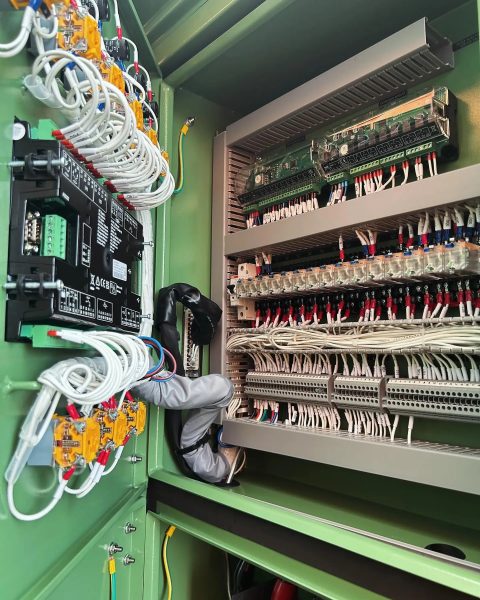
Thermographic switchboard scanning uses an infrared camera on boards under normal load to find loose terminations, unbalanced phases and overloaded circuits before they burn. Test and tag is carried out to AS/NZS 3760 with intervals set by environment, and switchboard inspection covers enclosure condition, labelling, schedule accuracy, earthing and available spare capacity.
What is included
Deliverables: site logbooks kept current, test certificates, an itemised defect register with risk ratings, and written remedial recommendations with indicative costs. Priced per site after a free inspection.
Where the testing finds something: We can fix it. Remedial work is quoted separately from the testing so a routine compliance visit is never used to carry unapproved repairs, but you are not left holding a defect register and someone else’s phone number.
FIT-OUTS AND DE-FITS
Commercial electrical fit outs and de-fits in Brisbane
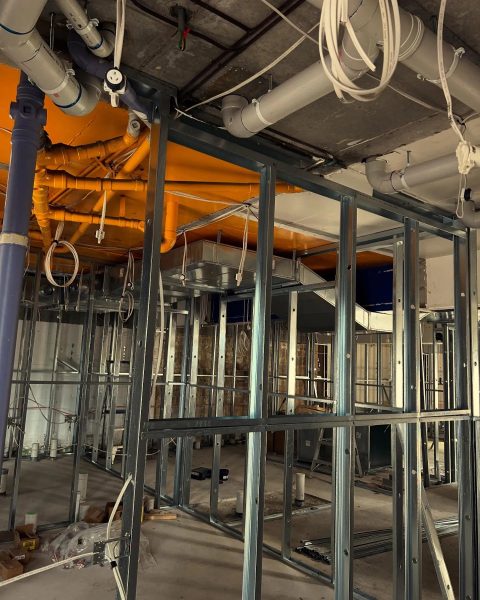
Everything on a fit out is measured against one date: handover. We plan the electrical package backwards from that date, order the long-lead items against it, and stage the works so the certificate, the testing and the tenant’s first day all land where they were meant to.
The items that miss handover dates are rarely the cables. They are the switchboard, the specified fittings and the distribution gear, all of which carry lead times that do not move because a programme wishes they would. Those are ordered first and tracked weekly.
On site, the sequence is coordinated with the other trades rather than argued about in the corridor: containment and pathways before the ceiling closes, data and comms rough-in coordinated with your comms contractor, mechanical services power ready for the plant commissioning date, and emergency and exit lighting tested and logged before occupancy rather than after.
De-fit and make good runs the same way in reverse. We confirm the landlord’s make good requirements in writing before anything is stripped out, isolate and remove cleanly, and hand back the tenancy to base building condition with the documentation the landlord’s agent will ask for.
What is included
Priced from the drawings and specification as a fully scoped lump sum, with assumptions, exclusions and any provisional sums stated in writing before award.
SERVICE AGREEMENTS
Long term electrical service agreements in Brisbane
A published programme, you know which visits happen when, what is inspected at each, what testing is included, when reports arrive and what we commit to when something goes wrong during business hours.
The programme structure is the same on every site and is written into the agreement. Regular site visits cover a switchboard and switch room walk-through, thermal check of critical boards, RCD push-button testing, a visual inspection of the exit and emergency lighting network and a review of any defects raised since the last visit. Regular visits add the full AS/NZS 2293.2 emergency lighting inspection and test and tag where it falls due. The annual visit adds the ninety minute emergency lighting discharge test, instrument RCD trip-time testing, thermographic scanning of all main boards and a full asset register review.
Reporting lands within five business days of each visit: certificates, logbook entries, an updated defect register with risk ratings, and photographs of anything material. A short written summary accompanies the annual visit so it can go straight into a board or ownership report without being rewritten.
We commit to a 2 business day response and attendance within the window stated in your agreement. The asset register is maintained across the term, and each annual review carries a three to five year lifecycle forecast so switchboard and fitting replacements enter your capital plan on your timing rather than on the day they fail.
What is included
Agreements run on a twelve month term with a fixed monthly or per-visit fee. Remedial works are quoted separately so routine testing is never used to carry unapproved repairs.
Book a free site inspection and see what your records are missing.
We walk the switchrooms, check the exit and emergency lighting network and review the documentation you currently hold. You get a written summary either way, whether you engage us or not.
Or call 0413 070 411
7am to 5pm, Monday to Friday
Why AMP’D
Planned work, done properly, in business hours
Three things facility managers tell us they cannot get from their current contractor.
01
Your Partner in Electrical Needs
We are the planned electrical partner that means you need one far less often. Planned inspection intervals, tested assets and a live defect register are what stop faults becoming after-hours events in the first place.
02
Documentation is supplied, not requested
Test certificates, logbook entries, the defect register and the remedial recommendations arrive after every visit as part of the service. You should never have to chase a record you have already paid for.
03
The same people know your site
One point of contact across a portfolio, and the same contractor walking the building each visit. Site knowledge accumulates instead of resetting every time a different technician is dispatched.
How it works
Five steps from first call to a maintained record
01
You make contact
Tell us the buildings, the asset types and what documentation you currently hold. You get a reply within 2 business days.
02
We inspect the site
A free walk-through of the switchrooms, boards, exit and emergency lighting and any known problem areas, with photos.
03
You receive a scoped proposal
Testing intervals, inclusions, reporting cadence and price, written down. Remedial work is separated from routine testing.
04
We deliver the programme
Scheduled visits coordinated around trading hours, with access arrangements confirmed before we arrive.
05
You get the records
Certificates, logbook entries, an updated defect register and a forward budget for lifecycle replacement.
Client references
What commercial clients say




Commercial FAQ
Questions we get asked before a programme starts.
General
We already have an electrician, how would this work?
You do not have to switch anything. Most of our commercial clients start us on overflow or project work alongside their incumbent and grow from there.
Are you licensed and insured?
Yes. Electrical Contractor Licence 1504460, with public liability and professional indemnity cover. Certificates of currency are supplied on request.
Can you work outside trading hours?
Yes, within business-hours scheduling where we can, and by arrangement for planned night or weekend works where a shutdown demands it. It is priced into the programme rather than treated as a callout.
Do you offer 24/7 emergency callouts?
No. We work standard business hours on planned and booked work. We say that plainly because a planned programme is what reduces the number of after-hours events you have in the first place.
Can you work across multiple sites?
Yes. Portfolios are managed under one agreement with one point of contact, one reporting format and a separate asset register per address.
Do you test smoke alarms?
Yes. Smoke alarm testing sits inside the compliance programme alongside exit and emergency lighting and RCDs, with results recorded per alarm and per location. Where alarms have expired or the interconnection has failed, that goes on the defect register with everything else.
Compliance
How often does exit and emergency lighting need testing?
Under AS/NZS 2293.2, a six-monthly inspection and a ninety minute discharge test at least annually, with results recorded in the site logbook. We keep the logbook current on your behalf.
What is thermographic scanning and do we need it?
An infrared scan of switchboards under load that finds loose terminations and overloaded circuits before they fail. Annual scanning is common on critical boards and some insurers ask for it.
What records do we actually get?
Test certificates, logbook entries, an itemised defect register with a risk rating, and written remedial recommendations with indicative costs.
How often do RCDs need testing?
Intervals depend on the premises type. Push-button testing is commonly three to six monthly and instrument trip-time testing annually to two-yearly in most commercial settings. We set the interval per site and record every result.
Do you do test and tag?
Yes, to AS/NZS 3760, with intervals set by environment. You receive an asset register listing every item, its test date and its next due date.
Fit outs
Can you work to a fixed handover date?
Yes. The programme is built backwards from handover, with long-lead switchgear and fittings ordered against that date rather than against the start date.
Do you handle make good and de-fit?
Yes. Tenancy de-fit and make good back to base building condition, with the landlord’s requirements confirmed in writing before we start stripping anything out.
Can you coordinate with our data and comms contractor?
Yes. Pathways, containment and rough-in are coordinated so the comms trade is not chasing our tray after the ceiling closes.
Can you handle electrical checks between tenancies?
Yes. Between occupancies we test and record the electrical assets in the tenancy, list anything needing attention before the incoming tenant takes possession, and complete the agreed works during the vacancy while the space is empty and access is easy.
Service agreements
What is the minimum term?
Twelve months, so the full annual testing cycle is covered. There is no lock-in beyond the term and the scope is reviewed each year against the asset register.
What response time do you commit to?
Within 2 business days response time and attendance within an agreed window during business hours, with the window stated in the agreement rather than implied.